
← Part of the CPAP & GLP-1 Adjustment Hub
The Traffic Jam Effect: CPAP and Gastroparesis Explained
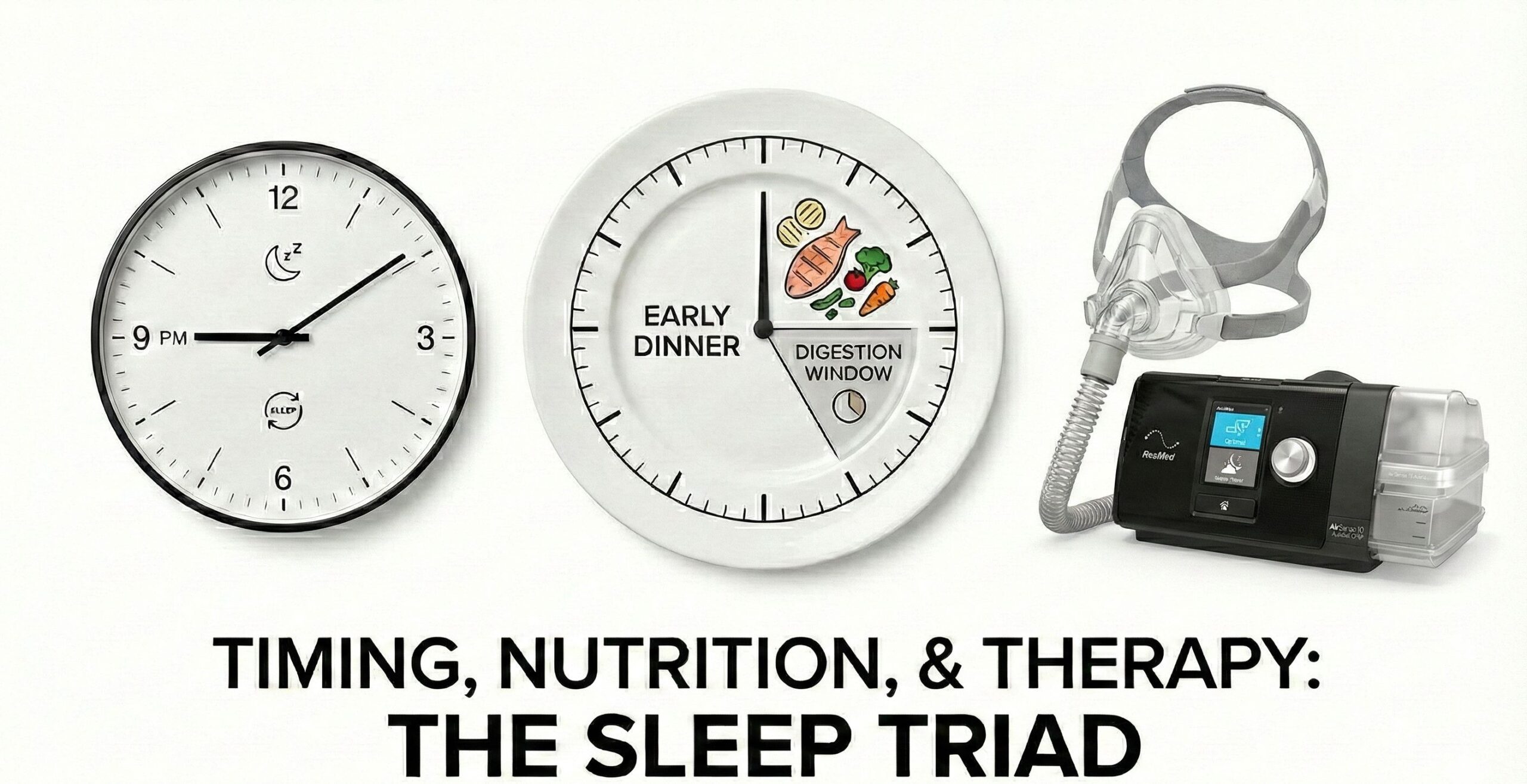
If you feel like your CPAP is “fighting” your stomach, or if you are waking up with acid in your throat despite years of successful therapy, you are likely experiencing the “Traffic Jam” effect. This isn’t just discomfort; it is a mechanical conflict between your medication’s side effects and your machine’s air pressure.
To solve it, we need to look at the intersection of CPAP and gastroparesis (delayed gastric emptying)—a condition that is intentionally induced by GLP-1 medications like Ozempic and Mounjaro.
Understanding the Gastric Delay
GLP-1 medications work by significantly slowing down how fast food leaves your stomach. This keeps you full longer, which helps with weight loss. However, it also means that when you go to bed at 10:00 PM, your stomach may still be physically full of the food you ate at 6:00 PM.
Under normal circumstances, that food would be gone. But on medication, it sits there. This creates a high-pressure environment inside the stomach that is waiting for a spark to ignite reflux.
The Mechanical Collision (LES Failure)
Your esophagus has a valve called the Lower Esophageal Sphincter (LES). Its job is to keep stomach contents down. However, CPAP therapy introduces a constant stream of positive air pressure into the throat.
When you combine CPAP and gastroparesis, you create a two-way traffic jam:
- The CPAP pushes air down.
- The full stomach pushes food and acid up.
- The GLP-1 medication can chemically relax the smooth muscle of the valve.
Caught in the middle, the valve fails, leading to severe heartburn or “silent reflux” that damages your throat.
3 Ways to Clear the “Traffic Jam”
- The 4-Hour Fast: You must stop all solid food at least 4 hours before sleep. This gives your slowed-down system a “head start” to clear the stomach before you introduce the air pressure of the machine.
- Hydration Timing: Avoid large amounts of water 60 minutes before bed. Liquid in a slow-moving stomach creates “sloshing” that CPAP air can easily churn into foam and reflux.
- The Incline Hack: Use a wedge pillow to keep your esophagus 6-8 inches above your stomach. This allows gravity to assist the weakened LES valve in keeping the “traffic” moving in the right direction.
Master the timing: Return to the CPAP & GLP-1 Hub.