
← Part of the CPAP & GLP-1 Adjustment Hub
CPAP Pressure Too High After Weight Loss? How to Tell
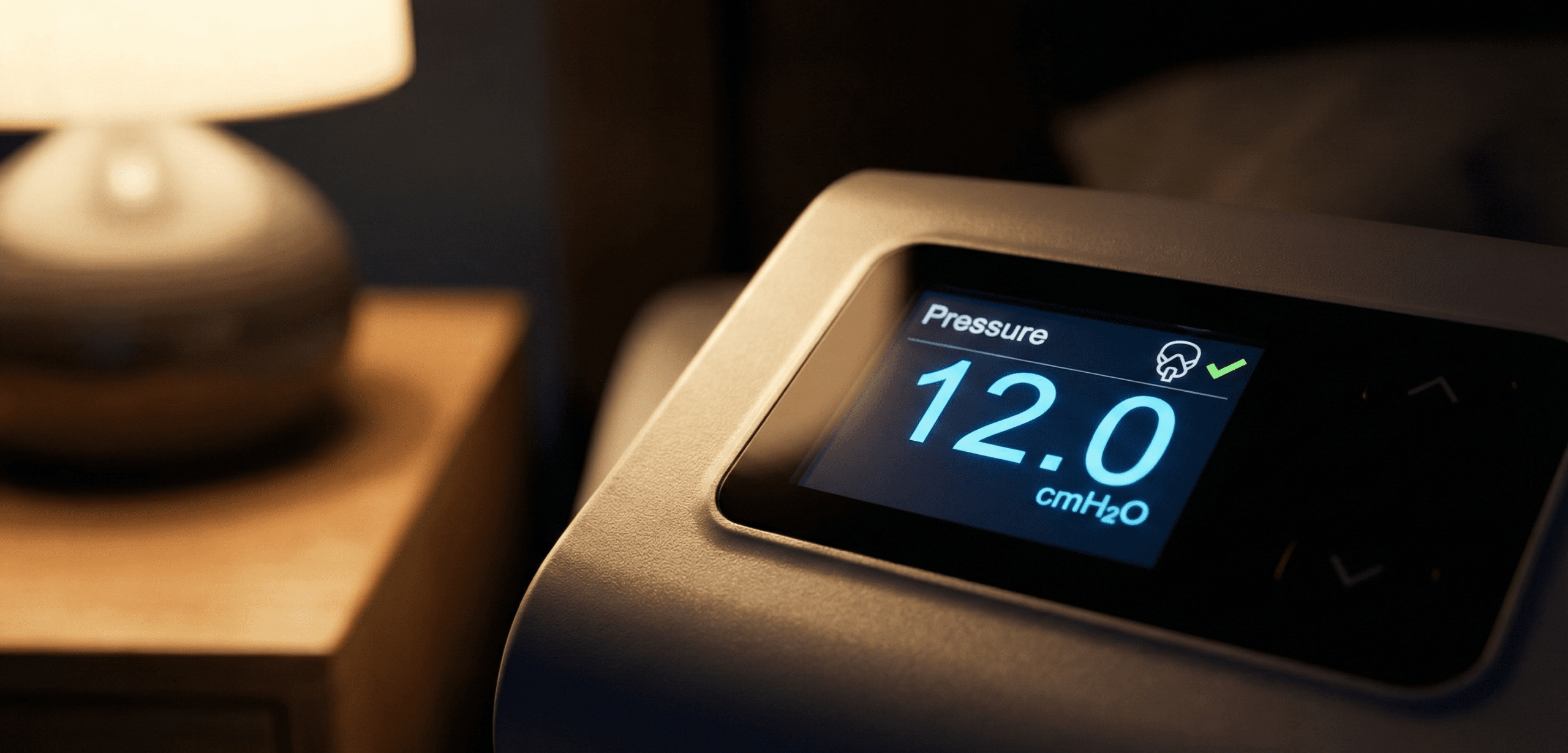
If your CPAP pressure feels overwhelming, like a leaf blower is stuck in your mouth, you likely aren’t imagining things. This uncomfortable sensation is actually a “success problem.” As you lose weight, the fat deposits around your neck and tongue shrink, making your airway naturally more stable.
The pressure that used to act as a necessary “splint” to hold your heavy tissue open is now overkill. Recognizing the physical CPAP pressure too high symptoms is the first step to adjusting your therapy to match your new body.
The 3 Physical Red Flags
When your machine (specifically an APAP) pushes more air than your body requires, you will notice these mechanical warning signs:
- “Chipmunk Cheeks”: Air is forced past your soft palate, puffing out your cheeks and getting trapped in your mouth. This happens because the air has nowhere to go since your airway is already open.
- The Exhale Struggle: You feel like you have to physically “push” hard to get your breath out against the incoming air. This causes chest wall fatigue and can make you wake up feeling like you’ve done a core workout.
- Sudden Mouth Leaks: Even if you use a chin strap, the high pressure will find a way to “blow” your lips open to escape, leading to dry mouth and a sore throat.
Why “Auto” (APAP) Doesn’t Always Fix It
There is a dangerous myth that an Auto-CPAP (APAP) will automatically lower itself indefinitely as you lose weight. This is false.
Most machines are programmed with a “Minimum Pressure” floor (e.g., 10 cmH2O). If your weight loss means you now only need 6 cmH2O to keep your airway open, the machine cannot go lower than its programming allows. You are effectively trapped at a pressure floor that is too high for your new physiology.
The Risk of Central Apnea
Ignoring these CPAP pressure too high symptoms isn’t just uncomfortable; it can be medically counter-productive. Excess pressure can sometimes trigger “Treatment-Emergent Central Sleep Apnea,” where the brain briefly stops signaling the body to breathe because the lungs are over-ventilated.
What to do next: See when to re-evaluate your settings with a doctor.