
← Part of the CPAP & GLP-1 Adjustment Hub
Why Left-Side Sleeping is a Game Changer for CPAP Users
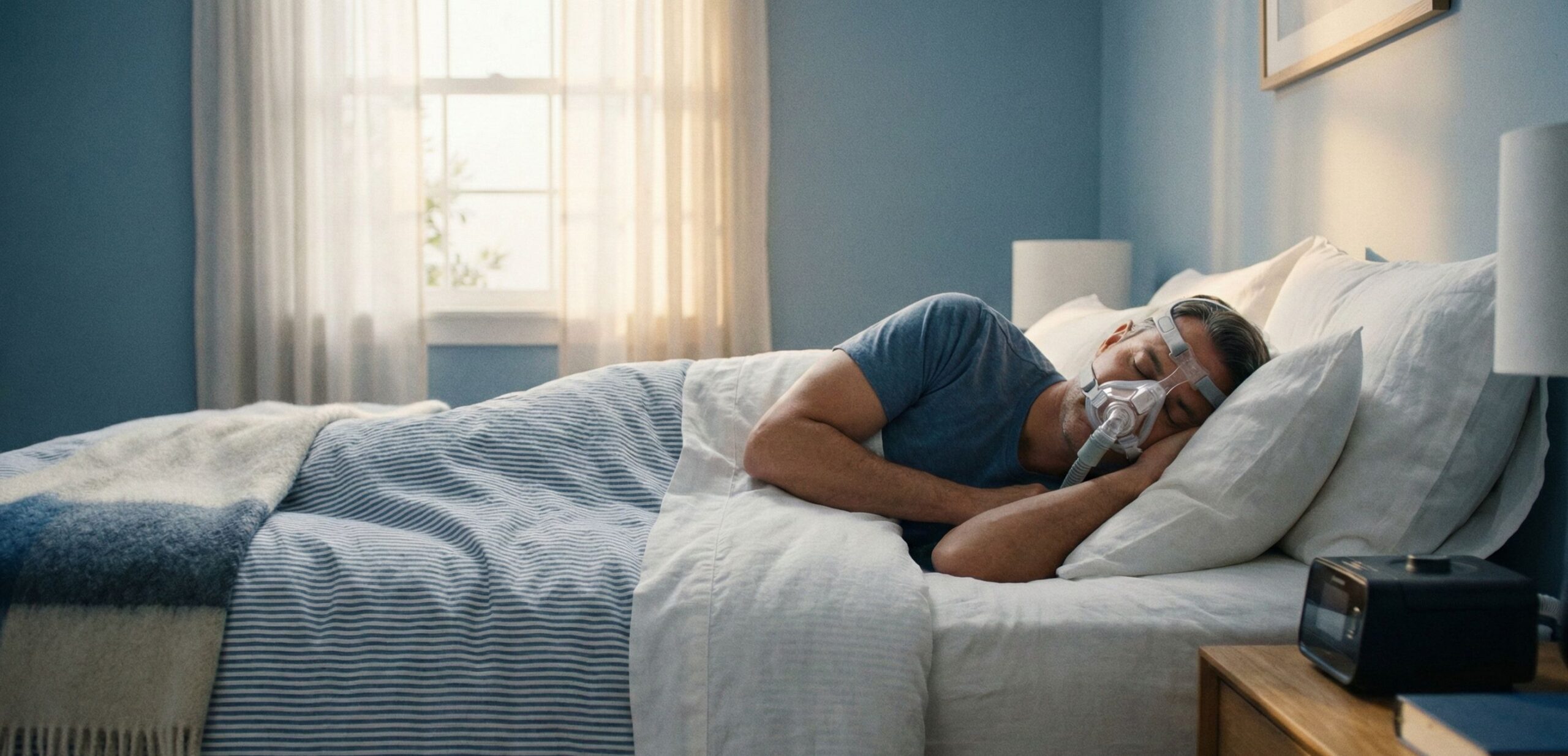
If you are struggling with bloating while on Ozempic or Mounjaro, the most effective tool you have isn’t a setting on your machine—it’s gravity. When you combine positive airway pressure with a full stomach, your sleeping position dictates whether that air goes to your lungs or your gut. This is why left side sleeping CPAP positioning is considered the “Gold Standard” for preventing side effects.
The Anatomy of the Left Side
To understand the benefit, you have to look at the shape of your stomach. It isn’t a symmetrical bag; it is shaped like a curved “J.” When you sleep on your left side, the stomach sits physically lower than the esophagus. This creates a natural “gravity trap” that keeps stomach acid and digesting food at the bottom of the pouch.
More importantly for CPAP users, this position keeps the pyloric sphincter (the exit valve to the intestines) in a favorable position to release gas downward, rather than letting it bubble back up into your throat.
The Dangers of the Right Side & Back
- Right Side Sleeping: When you roll to the right, gravity pulls stomach contents toward the esophageal valve. If CPAP air enters your throat while this valve is chemically relaxed (a common side effect of GLP-1s), the air can force the valve open, causing severe aerophagia (bloating).
- Back Sleeping (Supine): This is the worst position for apnea. Gravity pulls the tongue and soft palate backward, collapsing the airway. This forces your machine to work harder (higher pressure), which dramatically increases the risk of swallowing air.
3 Tips for Mastering the Position
Switching to left side sleeping CPAP habits can be hard if you are a lifelong back sleeper. Here is how to lock it in:
- The Body Pillow: Place a firm, long pillow behind your back. This acts as a “bumper” that prevents you from unconsciously rolling onto your back during deep sleep.
- Hose Management: Ensure your hose is routed above your head (using a hose hanger or a specific mask design). This prevents the hose from pulling the mask seal loose when your face is pressed against the pillow.
- The Knee Pillow: Place a small pillow between your knees. This aligns your hips and spine, reducing lower back pain and making it comfortable to stay on your side for the full 8 hours.
See also: Managing CPAP bloating and gas.