
← Part of the CPAP & GLP-1 Adjustment Hub
Is Ozempic Causing My CPAP Problems? Medication vs. Mechanics
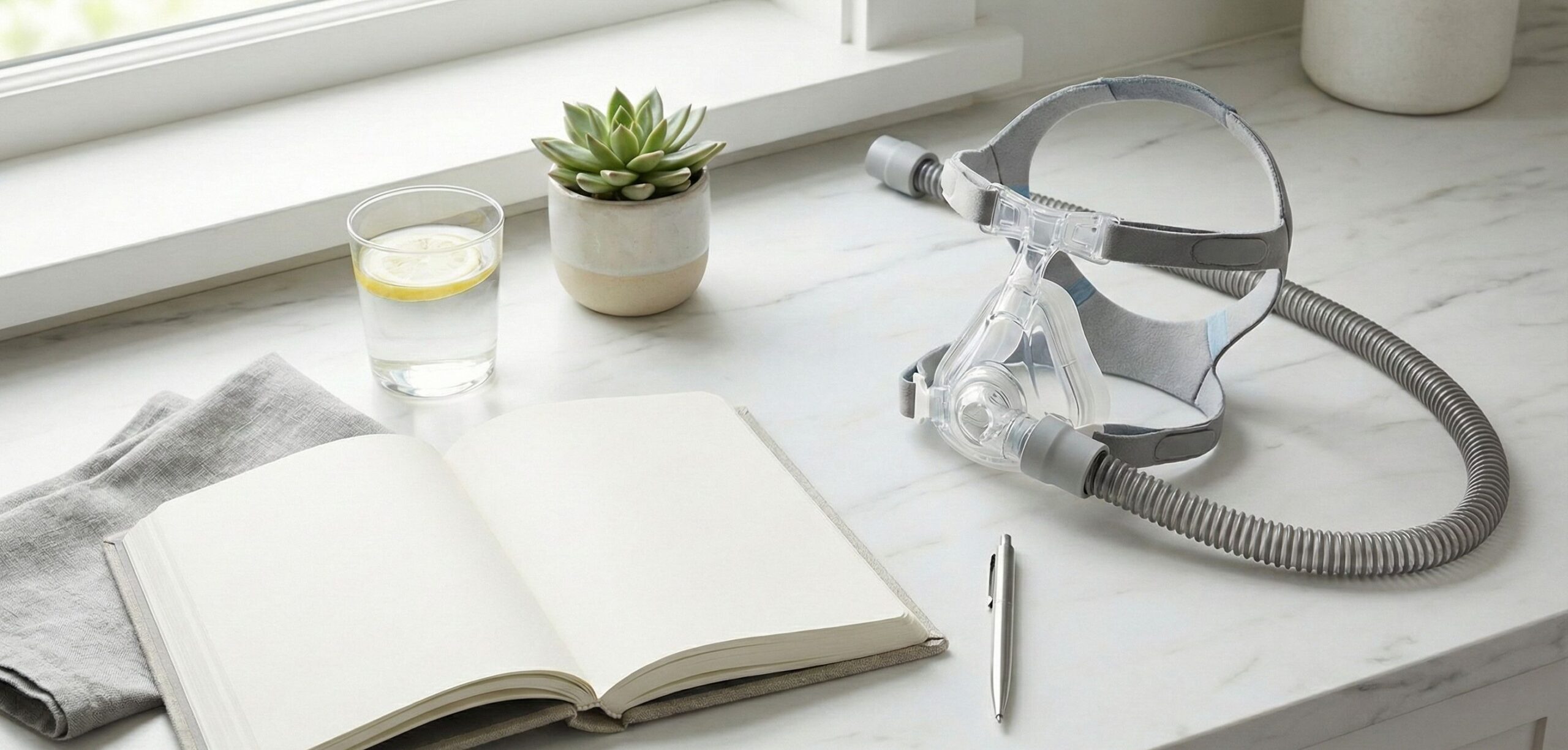
One of the most common questions from new GLP-1 users is: “Is the medication breaking my CPAP therapy?” The machine hasn’t changed, but your body has. The surge in Ozempic weight loss CPAP problems usually stems from a mismatch between your rapidly changing anatomy and your static machine settings.
The medication isn’t interfering with the machine’s electronics or algorithms. However, it is fundamentally changing your biological mechanics—specifically your facial structure and your digestive speed—which makes your old CPAP setup obsolete.
Biology vs. Mechanics: The Two Conflicts
To fix your sleep, you have to understand where the medication ends and the machine begins. Ozempic, Wegovy, and Mounjaro trigger a rapid systemic shift. This shift creates two primary mechanical conflicts that users often mistake for side effects.
1. The “Ozempic Face” Seal Conflict
Rapid fat loss often occurs first in the face (buccal fat pads). Your CPAP mask was likely fitted when your face had more “cushion.” Now, as your jawline and cheekbones become more prominent, the mask encounters “gaps” it wasn’t designed to fill. This is one of the most visible Ozempic weight loss CPAP problems: a mask that worked perfectly a month ago now leaks uncontrollably. It’s not a medication side effect; it’s a hardware-to-user mismatch.
2. The Gastric Pressure Conflict
GLP-1s work by slowing down your stomach (gastric emptying). If your CPAP pressure is set high to overcome a heavy, obstructed airway that no longer exists, that air is forced into your esophagus. Because your stomach is already full or slow-moving due to the medication, you experience intense bloating and aerophagia.
How to Pivot Your Strategy
- Downsize Your Mask: Don’t just tighten the straps. If you’ve lost more than 15 lbs, you likely need a smaller mask size or a different cushion shape to match your new contours.
- Audit Your Pressure: High pressure is the enemy of a slow digestive system. If you are experiencing “medication-induced” bloating, the fix is usually a downward titration of your machine settings.
- Monitor Your Data: Use tools like the MyAir app to see if your “leak rate” has spiked. A spike in leaks during weight loss is almost always a sign of facial contour changes.
Understanding the distinction between a medical side effect and a mechanical mismatch is the key to solving Ozempic weight loss CPAP problems without quitting therapy.