
← Part of the GLP-1 Nausea Rescue Series
GLP-1 Texture Traps: Why Popcorn and Salads Cause Bloating
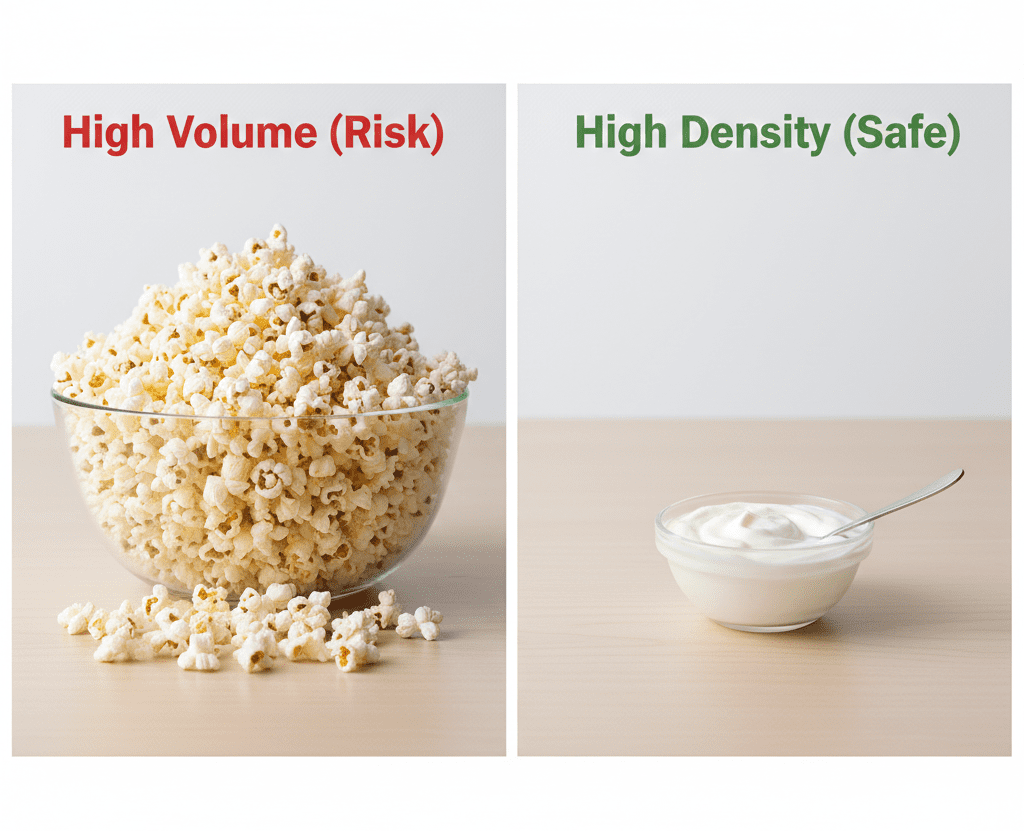
We are taught that “volume eating”—filling up on big salads, popcorn, and raw vegetables—is the secret to weight loss. But on GLP-1 medications, volume is the enemy.
Because your stomach emptying is delayed, foods that take up a lot of physical space become what we call GLP-1 texture traps. These high-volume foods sit in your stomach for hours, expanding and fermenting, which leads to that painful, hard-bloated feeling.
High Volume vs. High Density
To avoid nausea, you need to flip your thinking. Instead of “filling up,” focus on “fueling up” with compact, dense nutrition.
The Danger of “Roughage”
Raw vegetables like broccoli, cauliflower, and kale are incredibly healthy, but they are also fibrous and bulky. In a slowed-down stomach, they act like a blockage. They require intense mechanical digestion that your stomach simply cannot perform efficiently right now.
The Fix: Cook your vegetables thoroughly. Roasting or steaming breaks down the fibrous walls, collapsing the volume and making them much easier to process.
The Popcorn Paradox
Popcorn is the ultimate GLP-1 texture trap. It looks light, but it is effectively a dry sponge. Once it hits your stomach, it absorbs liquid and expands. A small bowl can quickly turn into a “stomach blockage” that lasts for 6+ hours.
Choose “Slider Foods” Instead
On your worst days, opt for “slider foods”—textures that slide easily through the stomach without requiring heavy churning. Things like Greek yogurt, cottage cheese, and protein puddings give you the nutrients you need without the mechanical bulk.