
← Part of the GLP-1 Nausea Rescue Series
Why You Feel Sick: The GLP-1 “Traffic Jam” Effect Explained
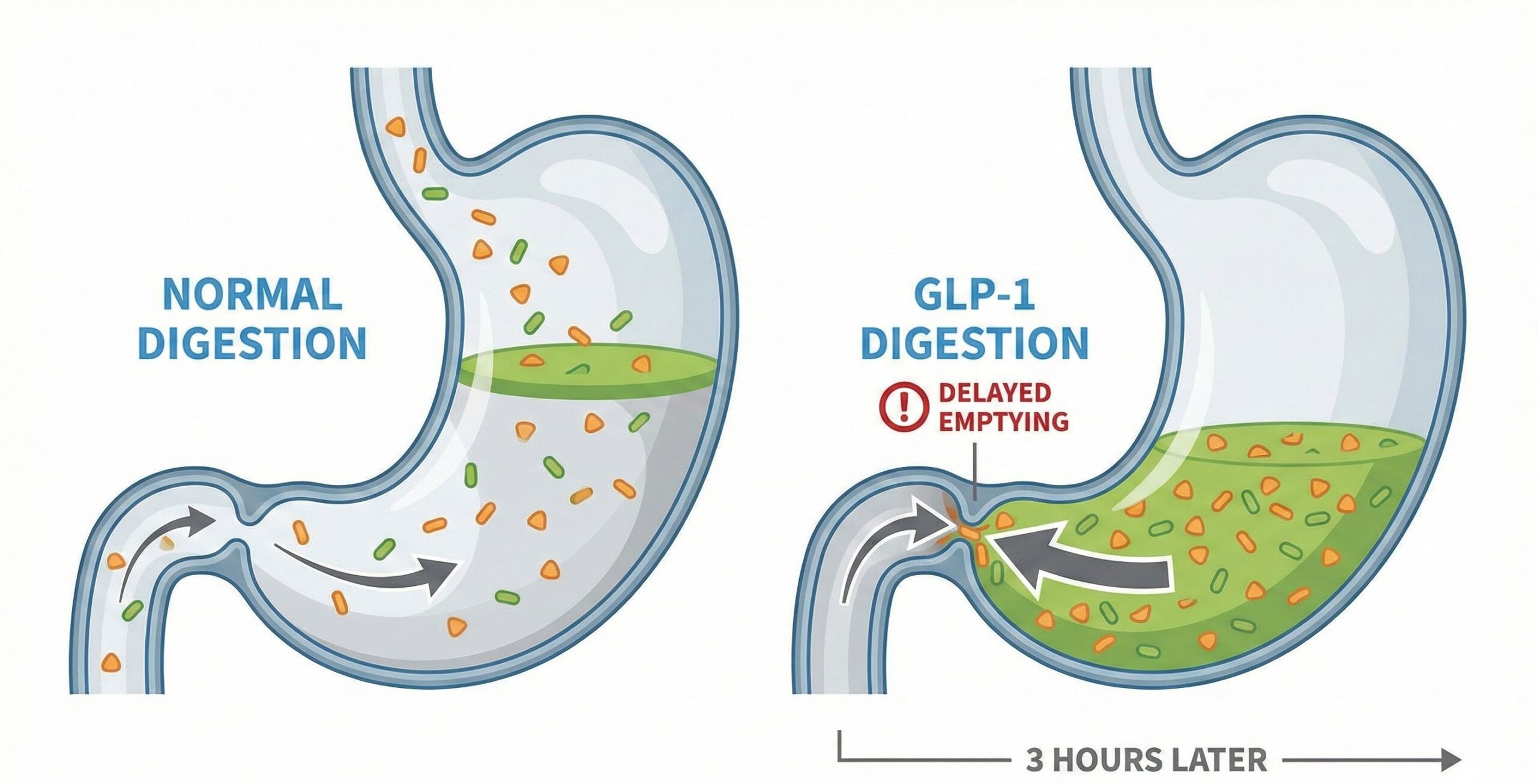
If you are struggling with nausea while taking Ozempic, Wegovy, or Mounjaro, please know that you aren’t doing anything wrong. Your body is simply learning to navigate a new mechanical reality called delayed gastric emptying.
Normally, a meal leaves your stomach in about 60 to 90 minutes. But on GLP-1 medications, that same food might sit there for 4 to 6 hours. It’s easy to see how eating a normal lunch on top of an 8:00 AM breakfast can quickly lead to what we call a “Traffic Jam”.
The Anatomy of the Struggle
When your stomach physically runs out of room, it sends a signal to your Vagus Nerve that can trigger nausea or vomiting just to clear the path. This isn’t a side effect you can just “push through”—it is a mechanical signal that your tank is overfilled.
This delay is also why your symptoms often feel worse depending on where you are in your weekly shot cycle.
The Fermentation Factor
When food stays in that “traffic jam” for several hours, it doesn’t just sit there—it begins to ferment. This process releases sulfur gas, which is often the culprit behind that painful bloating and those frustrating “sulfur burps.” If this is something you are dealing with, you may want to look into how to manage fermentation and gas.
Working With Your Body: Density over Volume
Because your “stomach real estate” is limited right now, the most gentle way to fuel yourself is to focus on density rather than volume. Think of it as sending “small cars” (dense protein) down the highway instead of “wide-load trucks” (big salads, bread, or pasta).
Many users find relief by adhering to a simple rule: avoid foods that take up space without offering nutrition. You can see which specific items to avoid in our common triggers list.